
Last Updated: June 30, 2026
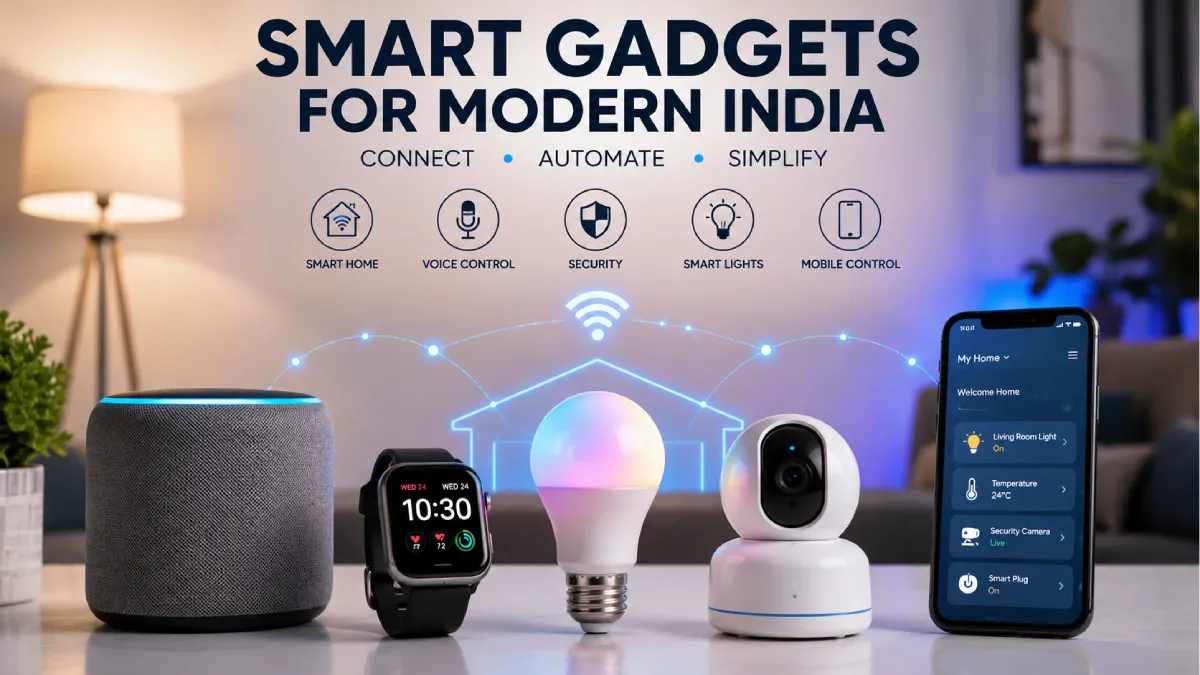
From smart lighting operated via smartphone to smartwatches that keep a check on the health, these gadgets make our lives much easier. Due to the evolution of high-speed Internet, artificial intelligence, cloud services and IoT, smart devices are now within reach of every common man. If you plan to create a smart home, boost workplace productivity or are seeking a gadget to make your personal life smoother, then a deep insight on how smart devices work will help you make the right purchase. Read this guide to know all about smart gadgets-their types, benefits, demerits, factors to consider while buying them and what expectations to have.
Table of Contents
What Are Smart Gadgets?
A smart gadget is defined as an electronic gadget that comes loaded with intelligent technology so it can interact or communicate with other devices or users, control, automate or monitor processes.
Unlike conservative electronics, smart gadgets frequently comprise:
- Wi-Fi connectivity
- Bluetooth communication
- Artificial Intelligence (AI)
- Voice control
- Cloud synchronisation
- Mobile app integration
- Sensors for automation
This enables technologies to proactively and automatically react to what the user is doing, when they are doing it and to their current situation.
Why Smart Gadgets Are Becoming Popular
Various factors have paved the way for smart devices to gain widespread acceptance in India.
These include:
- Better internet connectivity
- Affordable smartphones
- Increasing availability of smart home products
- Growing awareness of home security
- Rising demand for energy-efficient solutions
- Expansion of online clothes shopping platforms
The number of households, professionals, students, and families who invest in smart connected devices to facilitate ease and convenience is increasing.
Common Types of Smart Gadgets
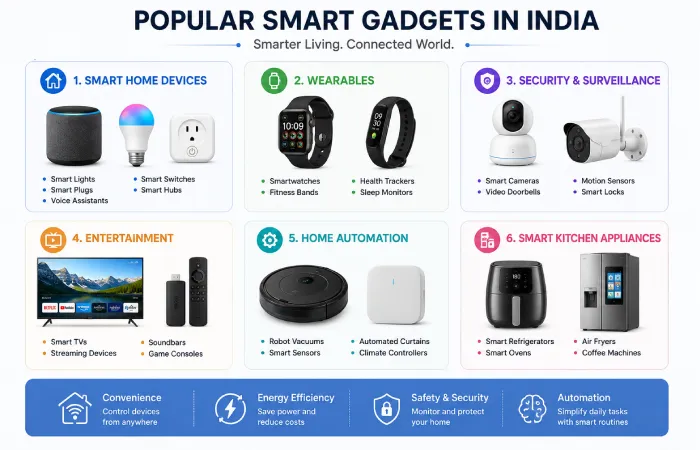
Smart gadgets are available across the many categories.
| Category | Common Examples | Primary Purpose |
| Smart Home | Smart bulbs, plugs, switches | Home automation |
| Security | Smart cameras, video doorbells | Monitoring and protection |
| Wearables | Smartwatches, fitness bands | Health tracking |
| Entertainment | Smart TVs, streaming devices | Media consumption |
| Kitchen | Smart air fryers, coffee makers | Cooking automation |
| Cleaning | Robot vacuum cleaners | Automatic cleaning |
| Productivity | Smart notebooks, digital assistants | Organisation |
| Health | Smart weighing scales, BP monitors | Health nursing |
Key Features of Smart Gadgets
Contemporary smart devices offer a multitude of high-level functionalities.
Wire-less Connectivity
Most devices connect through:
- Wi-Fi
- Bluetooth
- Zigbee
- Matter
- Thread
Wireless communication enables remote control without complicated wiring.
Smartphone Control
Nearly all smart gadgets include dedicated mobile applications that allow users to:
- Monitor status
- Change settings
- Receive alerts
- Create automation routines
- Update firmware
Voice Assistant Compatibility
Many devices work with:
- Google Assistant
- Amazon Alexa
- Apple Siri
Users can perform actions using simple voice commands.
Automation
Automation allows devices to perform actions automatically.
Examples include:
- Turning lights on at sunset
- Switching off appliances when leaving home
- Adjusting air conditioning automatically
- Sending motion alerts
Smart Gadgets Specifications Overview
| Specification | Typical Range |
| Connectivity | Wi-Fi, Bluetooth, Zigbee, Matter |
| Power Source | Battery, USB-C, Mains Power |
| Mobile Support | Android & iOS |
| Voice Support | Alexa, Google Assistant, Siri |
| Software Updates | OTA (Over-the-Air) |
| Remote Access | Yes |
| Cloud Storage | Optional |
| Local Storage | Available on selected devices |
Popular Uses of Smart Gadgets
Smart gadgets have practical applications in many areas of everyday life.
Home Automation
Examples include:
- Smart lighting
- Smart switches
- Smart plugs
- Smart curtains
These improve convenience and may help reduce electricity consumption.
Home Security
Security devices include:
- CCTV cameras
- Motion sensors
- Smart locks
- Door sensors
- Video doorbells
Many allow real-time notifications through mobile apps.
Health Monitoring
Health-focused gadgets include:
- Fitness trackers
- Smart weighing scales
- Sleep monitors
- Heart rate monitors
- Blood pressure monitors
These provide useful information but should not replace professional medical advice.
Entertainment
Popular entertainment gadgets include:
- Smart TVs
- Streaming sticks
- Smart speakers
- Wireless audio systems
Workflow: How Smart Gadgets Work
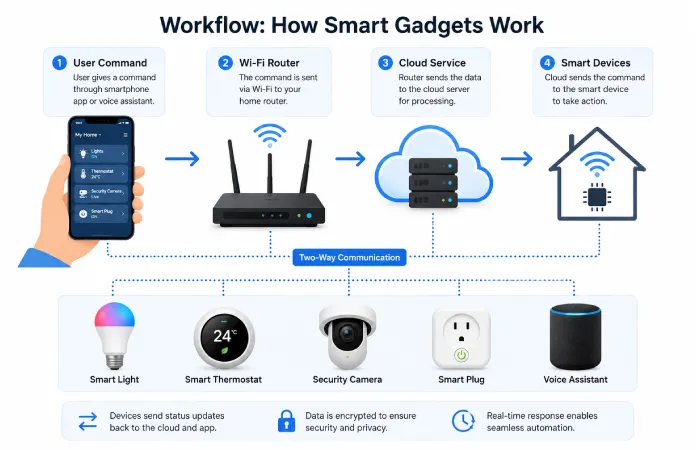
User Command
↓
Mobile App / Voice Assistant
↓
Wi-Fi or Bluetooth Connection
↓
Cloud or Local Hub
↓
Smart Gadget Receives Instruction
↓
Device Performs Action
↓
Status Sent Back to User
Performance Expectations
While gadgets can make life easier, a lot of how effectively that actually plays out in real life will depend on many of those same components.
These include:
- Internet reliability
- Device quality
- Software updates
- Router placement
- Home network speed
Users will want to anticipate regular firmware upgrades and potentially updates to device compatibility, etc. Entry level device simply can’t perform or last in the same way as high-end devices.
Advantages of Smart Gadgets
Some major benefits include:
- Improved convenience
- Time-saving automation
- Remote access
- Better energy management
- Enhanced home security
- Voice control
- Easy scheduling
- Integration with multiple devices
Limitations of Smart Gadgets
Despite their benefits, smart gadgets also have limitations.
These include:
- Dependence on internet connectivity
- Potential privacy concerns
- Compatibility issues between brands
- Initial setup complexity
- Software update requirements
- Higher purchase cost than traditional devices
Understanding these limitations helps set realistic expectations.
Build Quality and Materials
Smart gadgets are commonly manufactured using:
- ABS plastic
- Polycarbonate
- Aluminium alloy
- Tempered glass
- Silicone
- Stainless steel
Outdoor devices generally include weather-resistant ratings such as IP65 or IP67.
Battery Life
Battery-powered smart gadgets vary significantly.
| Device Type | Typical Battery Life |
| Smartwatch | 2–14 days |
| Smart Door Sensor | 1–2 years |
| Smart Camera | 3–12 months |
| Fitness Band | 7–20 days |
| Wireless Earbuds | 4–10 hours per charge |
Actual battery life depends on usage and environmental conditions.
Smart Gadgets Comparison
| Feature | Smart Gadget | Traditional Device |
| Remote Control | Yes | No |
| Automation | Yes | No |
| Voice Commands | Supported | Not Available |
| Mobile App | Yes | No |
| Scheduling | Yes | Manual |
| Notifications | Yes | No |
| Firmware Updates | Yes | No |
Who Should Buy Smart Gadgets?
Smart gadgets may be suitable for:
- Homeowners
- Working professionals
- Families
- Technology enthusiasts
- Elderly users requiring remote monitoring
- Students living independently
- Small business owners
Who Should Avoid Buying Immediately?
Some users may prefer conventional devices if:
- Reliable internet is unavailable
- They rarely use smartphones
- Privacy concerns outweigh convenience
- Automation features are unlikely to be used
- Budget is limited
Are Smart Gadgets Legitimate?
Yes. Smart gadgets are legitimate consumer electronics produced by many recognised manufacturers.
Before purchasing, consider:
- Product certifications
- Warranty availability
- Customer reviews
- Software support
- Security updates
- Brand reputation
Buying from authorised retailers helps reduce the risk of counterfeit products.
Alternatives to Smart Gadgets
Depending on your needs, alternatives include:
- Traditional electrical appliances
- Manual lighting controls
- Standard security systems
- Conventional fitness equipment
- Mechanical timers
- Non-connected home appliances
While these options may cost less, they generally lack automation and remote-control capabilities.
Buying Tips for Smart Gadgets in India
Before purchasing, consider the following checklist.
1. Check Compatibility
Ensure the gadget supports:
- Android
- iPhone
- Existing smart home ecosystem
2. Verify Connectivity
Choose devices supporting:
- Dual-band Wi-Fi
- Bluetooth 5.0 or later
- Matter compatibility where possible
3. Review Privacy Features
Look for:
- Encryption
- Two-factor authentication
- Regular firmware updates
4. Compare Warranty
Most reliable products offer:
- One-year warranty
- Customer support
- Service centres in India
5. Consider Forthcoming Expansion
If constructing a smart home, safeguard devices are likeminded with each other.
Practical Expectations Beforehand Buying
Yes, there will be a learning bend. Expect to spend time learning to connect and control devices, periodic software updates and, of course, reliance on supporting apps and voice commands. Stick to the best brands and use them at home with a stable connection and your smart devices should bring a level of convenience and control.
FAQ’S
What are smart gadgets?
Smart gadgets are smart electronics devices which are equipped with features like Bluetooth, Wi-Fi, AI, and Sensors to automatically automate things, connect to a smartphone, and enhance the function.
Are smart gadgets worth buying in India?
Smart devices offer greater convenience, security, and energy efficiency to numerous households. Its usefulness comes down to your needs, internet connection, and devices currently owned.
Do smart gadgets require internet access?
While certain functions are available offline via Bluetooth, most advanced features including the mobile app interface, cloud integration, and automation, are only available via an internet connection.
Are smart gadgets secure?
These are typically provided by any competent manufacturer along with other tools and security patches. Passwords must be strong and2-factor authentication should be enabled. It’s wise to run latest firmware updates on the device.
Can smart gadgets work together?
Yes. Many smart gadgets integrate through smart home platforms or industry standards, allowing multiple devices to operate together through routines and automation.
Conclusion
These smart gadgets and devices have helped revolutionise the way we all access and use technology, whether that’s at home, work or on the move. From the convenience of automation to enhanced levels of security, control, and surveillance, these tools make our lives that bit simpler, although it’s worth considering how these devices link together and support each other, while not forgetting that privacy is a key issue for many. In India, the prices for these kinds of devices are reducing dramatically, meaning you really can start to build an affordable and convenient smart world of your own – though it helps to weigh the good against the bad.
